
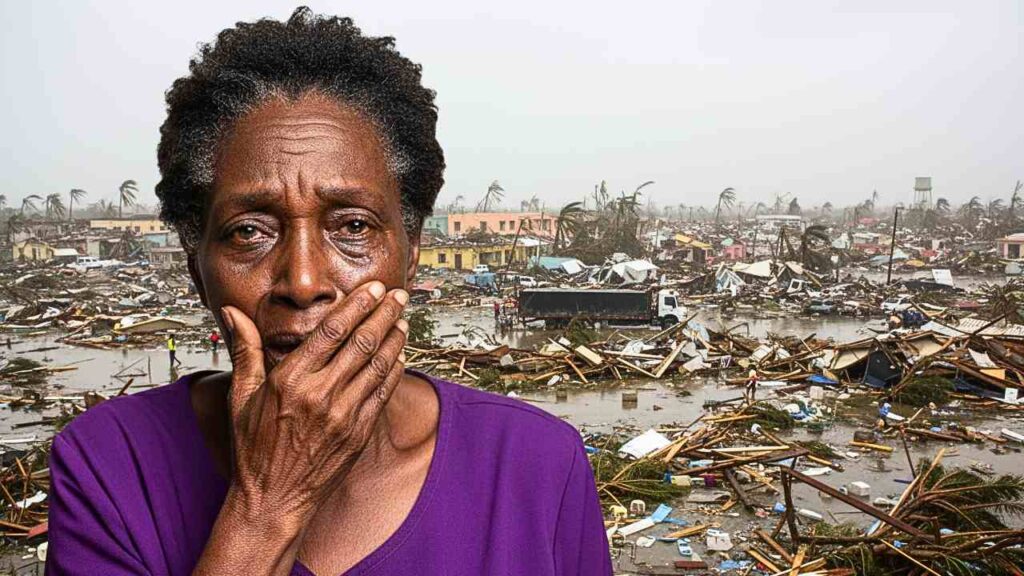
The southern parish of St. Elizabeth, traditionally known for its agricultural output and distinctive coastline, now faces an unprecedented rebuilding effort following the passage of Category 5 Hurricane Melissa. Early assessments and ground reports confirm that the storm’s trajectory delivered a direct and sustained blow, fundamentally altering the landscape and infrastructure of key areas, including the parish capital, Black River, and the popular tourist hub of Treasure Beach.
Full Video Podcast discussion of this topic at the end of the article
Coastal Devastation
The scale of the damage across the south coast is immense. Prime Minister Dr. Andrew Holness, speaking after an aerial inspection, described the task of restoring the parish as “a massive task,” specifically citing the town of Black River as having been effectively flattened.
According to reports carried by both the Jamaica Gleaner and the Jamaica Observer, the physical destruction has been geographically severe. During his airlifted reconnaissance of the affected corridor, Prime Minister Holness reported that between 80 and 90 per cent of residential and commercial roofs between Treasure Beach and Black River had been torn off.
The coastal areas, which support a significant portion of Jamaica’s community-based tourism, suffered immediate and extensive damage. Properties that rely on the area’s unique charm, such as the widely celebrated Jakes restaurant in Treasure Beach, and Lashings Boutique Hotel, have borne the brunt of the Category 5 winds and associated storm surge. This devastation is already drawing comparisons to past major storms like Hurricane Ivan and Hurricane Gilbert. For a deeper review of this event, read our initial report on Hurricane Melissa’s Wrath on Jamaica.
The Collapse of Infrastructure
While the coastal towns faced wind and water damage, inland communities were not spared. The town of Santa Cruz, a central commercial and transport node, experienced significant flooding, compounding the logistical challenges for relief efforts.
The Category 5 impact critically damaged the health sector. Black River Hospital, the sole public medical facility for the parish, sustained significant structural damage to its administrative block and roof sections. Flooding from the storm surge and excessive rainfall inundated parts of the building, and the facility suffered a complete loss of power. 75 patients were relocated to safety or higher floors within the building ahead of the storm surge, a vital effort conducted by staff who continued working under extremely difficult conditions.
In a critical response to the hospital’s near total incapacitation, an emergency field hospital has been deployed and set up at Black River High School. This temporary facility, provided by the international organization Samaritan’s Purse in coordination with the Ministry of Health and the Jamaica Defence Force (JDF), includes over 30 inpatient beds, an operating theatre, and an emergency room. It is designed to bridge the severe gap in medical services until the Black River Hospital can be restored.
Across the affected zone, essential infrastructure has been rendered non-functional. Thousands of residents remain cut off from relatives, with communication lines completely severed or severely hampered. The immediate aftermath is characterized by a critical absence of electricity and potable water, creating urgent public health concerns and hindering recovery work. The lack of power and clear access roads has isolated communities, making rapid deployment of assistance nearly impossible in the first 72 hours post-impact.
The environmental attractions that draw visitors to the region are also impacted. The waterways that feed into the Black River, the site of popular nature excursions like a Black river adventure tour, will require extensive surveying to assess how the natural ecosystem has been disrupted by the hurricane’s force.
The Human Cost
Beyond the structural damage and infrastructure collapse, the human element represents the most critical challenge. The confirmed reports of 80 to 90 per cent roof loss translate directly into mass displacement. Thousands of families are now without safe homes, relying on shelters or the generosity of unaffected neighbours.
For a population where livelihoods are often intrinsically linked to property—whether through small businesses, farming, or community tourism—the destruction means an immediate loss of income potential. The hurricane has not only taken homes but has eliminated the established means of earning a living, forcing a financial and social reset for entire communities. The task facing the government, as noted by the Prime Minister, is not merely to repair, but to fundamentally rebuild a functioning local economy and social structure.
Share your thoughts and insights on the path forward for St. Elizabeth in the comment section below.
Full episode on this topic
Do you want more Kareem’s Quest content?