
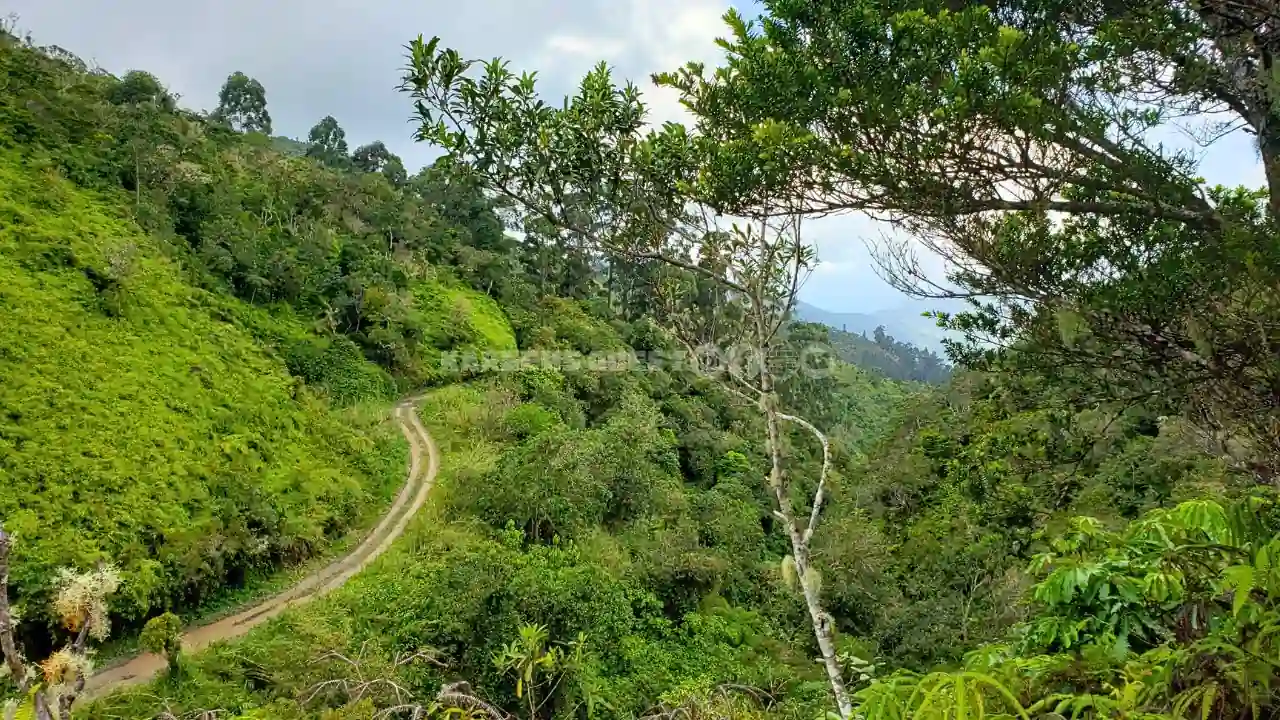
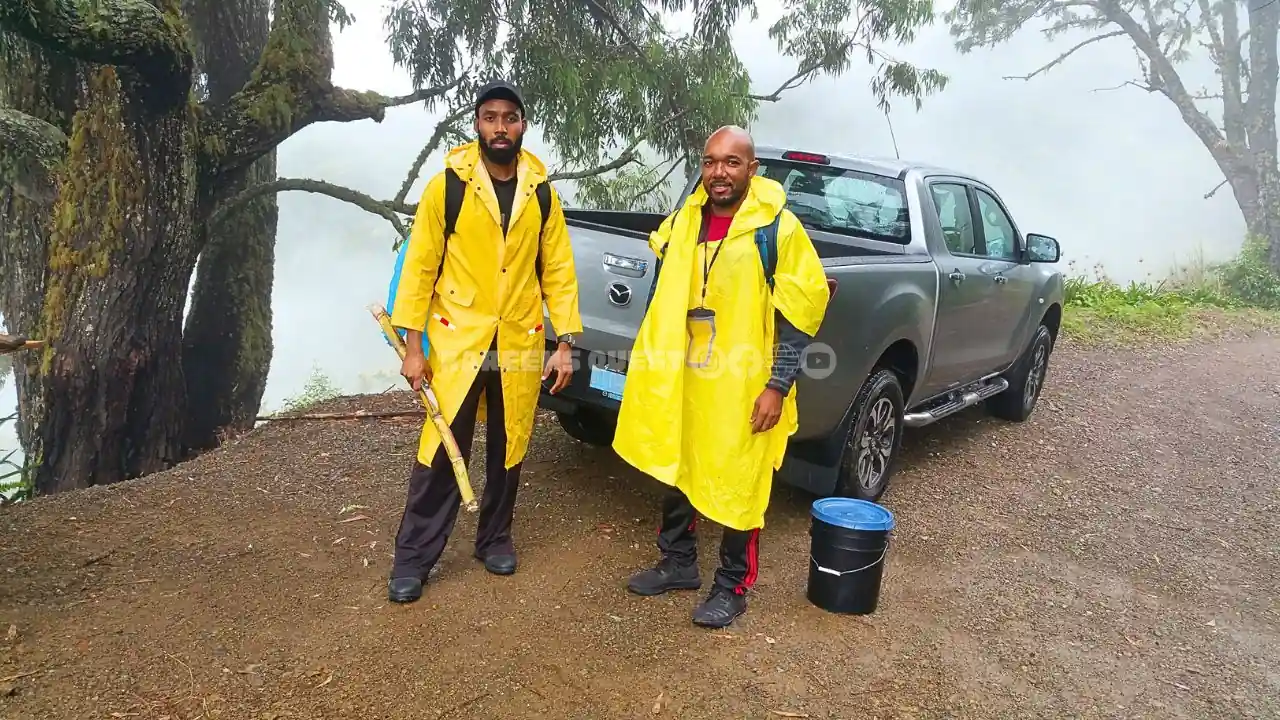
After what felt like an eternity of bumps and turns, we found our turnoff. The incline became aggressively steep, narrowing to a single-lane track. This stretch was so tight that if another vehicle approached from the opposite direction, one of us would have to find a wider spot and reverse. Eventually, we reached a large, ancient tree where a local confirmed our suspicions: “No more road here, boss.” Our driving portion was over. The real ascent was about to begin.
Jacob’s Ladder and Beyond: The Ascent Begins
Armed with raincoats and backpacks filled with essential snacks, we started on what locals affectionately call ‘Jacob’s Ladder.’ This initial segment was a relentless incline, demanding immediate respect from my knees and hips. Every step was a deliberate effort, pushing me to get to the next level. It took us a grueling hour and a half to reach Portland Gap, the hike’s midpoint. Here, we found basic cabins and surprisingly well-maintained bathroom facilities. A ranger, a seasoned veteran of these slopes, advised us this was the last stop for such amenities. He also mentioned that many climbers, daunted by the journey thus far, choose to turn back at this point.
But not us. Determined to reach the summit, we pressed on. As if on cue, the heavens opened, and a heavy rain began to fall. Despite the freezing mountain air, our exertion kept our body temperatures surprisingly high, providing a welcome warmth. This leg of the journey truly underscored the importance of proper gear. I was wearing worn sneakers, a decision I quickly regretted as my feet slipped occasionally on the slick, muddy path. Mountain climbing boots are undeniably the best choice for these conditions. We had to stop frequently, resting our aching knees and hips. Along the way, we encountered an elderly couple, their faces radiating with quiet determination, who simply smiled and said they made this pilgrimage every year. Their resilience was a powerful motivator.
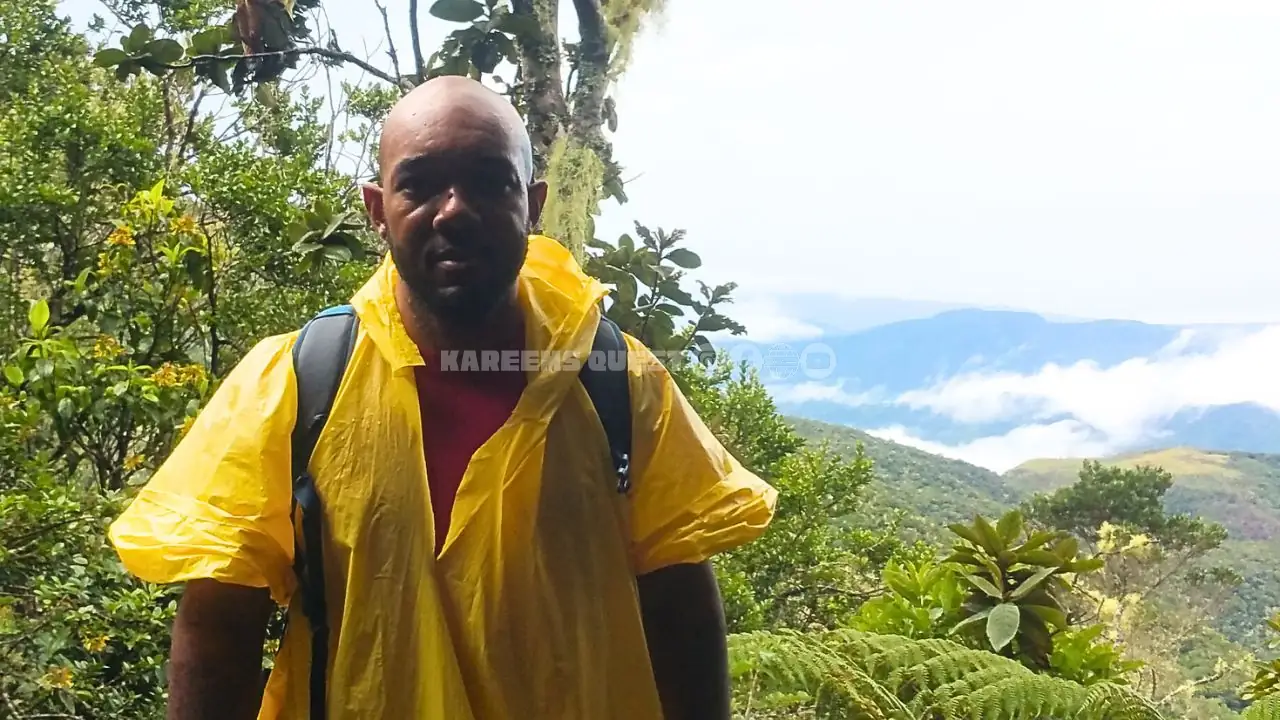
The fog grew thicker as we ascended, a swirling, ethereal presence that hinted at our proximity to the summit. Then, through the mists, a sign emerged: “Blue Mountain Peak.” We had made it! The cold was immediate and intense – around 40 degrees Fahrenheit and by Jamaican standards, this was cold. Our body temperatures, once high from the climb, rapidly dropped without movement.
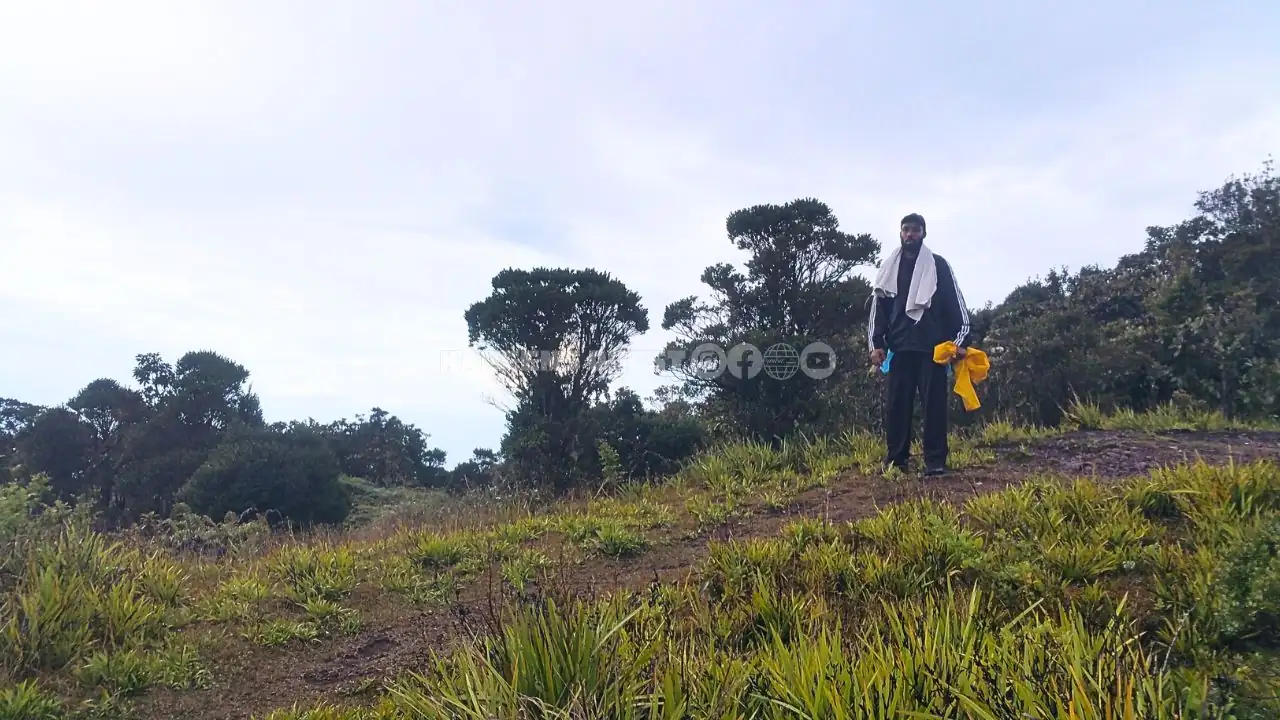
At the very top, we found an abandoned structure, a stark, solitary sentinel against the elements, and a close-by metal triangulation station. I fumbled for a snack, but my fingers were too numb to properly grasp anything. We ignored the discomfort as best we could, soaking in the profound sense of accomplishment. While the clouds obscured any view of Cuba that day, the panoramic sweep of the surrounding parishes was breathtaking, a sea of green stretching to the distant horizon.
The Descent and Sweet Rewards

The descent took another three and a half hours, a surprisingly difficult journey as gravity now pulled us rather than pushed us. On our way down, the crisp air was filled with the aroma of rich soil and something sweet. We spotted a farmer tending to his crops, surrounded by thriving peach trees and robust coffee plants. We purchased fresh peaches and some of his exquisite Blue Mountain Coffee – a reward that felt especially earned after our strenuous climb.
The Global Allure of Blue Mountain Coffee
This journey truly brought home the significance of Blue Mountain Coffee, a globally protected certification mark. What makes it so special isn’t just its premium price tag, but its unparalleled flavor profile: a remarkable mildness, a complete absence of bitterness, an almost silken smoothness, and subtle hints of chocolate and nutty overtones. The specific microclimate and high altitude of this region – primarily between 2,000 and 5,000 feet – are crucial to its unique characteristics. Many farms, like the one we encountered, offer tours, allowing visitors to see the cultivation process firsthand and, of course, taste the freshest brew imaginable. It’s a key reason why so many travelers seek out these mountains.
More Than Just a Hike: Activities and Practicalities
Beyond the iconic Blue Mountain Peak hike (which, at 7,402 feet or 2,256m, is indeed challenging and often undertaken at night to catch the renowned sunrise), the Blue Mountains offer a wealth of experiences. The Blue and John Crow Mountains National Park, a UNESCO World Heritage Site, is a biodiverse wonderland. Hikers can explore its cloud forests, home to unique flora and fauna, and spot endemic bird species like the magnificent Doctor bird (Streamertail hummingbird), Jamaica’s national bird.
Other activities include exhilarating downhill biking tours, refreshing dips in waterfalls like Penfield or Cascade Falls, and camping at scenic spots such as Holywell National Park. The historic Cinchona Botanical Gardens also offers a glimpse into rare plant life. For those interested in the island’s history, the mountains hold deep cultural significance as a refuge for the Maroons, whose vibrant heritage is still present in these communities.
Planning a trip requires some foresight. Accommodation options range from the luxurious Strawberry Hill Hotel to eco-friendly farms like Lime Tree Farm, or more rustic hostels such as Whitfield Hall. Getting here almost certainly necessitates a 4-wheel-drive vehicle due to the treacherous and winding roads, and arranging transportation from Kingston or other major cities is advisable. Be prepared for the cooler, often misty climate and higher rainfall, a stark contrast to the tropical warmth of the coast.
My journey to the peak was a profound experience, a physical and mental challenge rewarded with unparalleled natural beauty and a deeper connection to Jamaica’s majestic heartland. If you’re seeking an adventure that engages all your senses and leaves you with an enduring sense of accomplishment, the Blue Mountains await.