
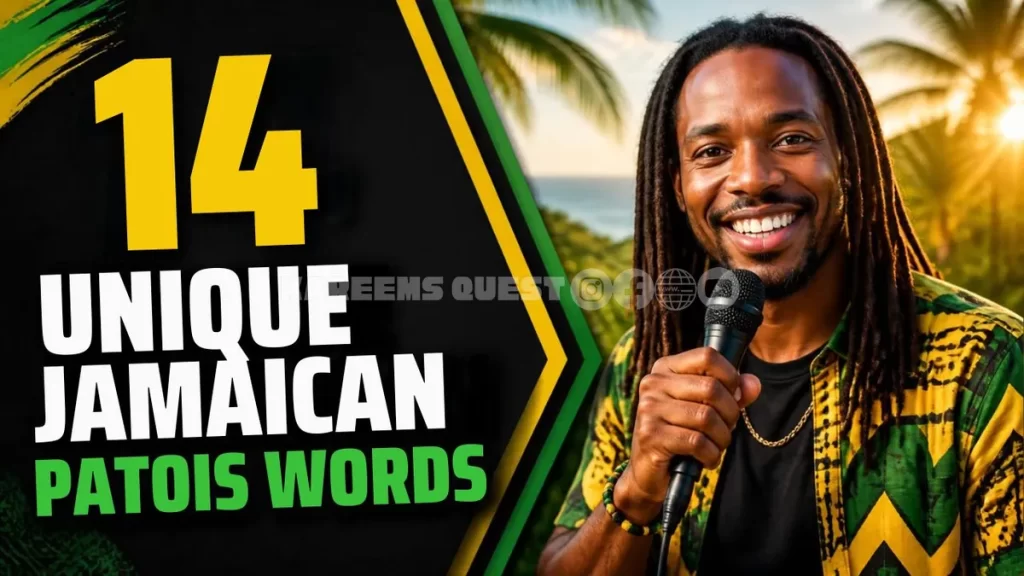
Jamaican Patois is far more than an accent or a collection of casual street slang. It is a fully formed language created out of necessity, trade, migration, and resistance. While Standard English forms much of the primary vocabulary, the heart, grammar, and nuance of Patois are heavily shaped by West African languages like Akan, Ewe, and Igbo, alongside influences from Spanish, Portuguese, East Indian languages, and regional British dialects.
Watch my full video below
When you listen closely to everyday conversation in Jamaica, you hear words that carry centuries of history and deep social commentary. Understanding these words gives you an authentic look into how Jamaicans view character, relationships, food, and conflict. Here is a breakdown of 14 unique Patois words, their meanings, and the cultural history behind them.

Character Traits: From Selfishness to Trickery
Patois has precise terminology for evaluating human behavior and personal character. Many of these descriptors trace back to historical figures and West African folklore.
- Coomu-coomu: Used to describe someone who is self-centered, detached, and conniving. A coomu-coomu person acts with complete disregard for other people’s circumstances or feelings. Because of their distant and selfish behavior, they often struggle to maintain real friendships.
- Kumujin: Derived from the word curmudgeon, a kumujin is a selfish person who hoards knowledge or specialized skills. If forced to share information, they will deliberately distort it so others cannot benefit. They operate with a deep, underlying distrust of everyone around them.
- Ginal: A ginal is a smooth-talking con artist, trickster, or modern-day scammer. If a friend promises to join you for dinner but disappears to the washroom right when the bill arrives, leaving you to pay for everything, that person is a typical ginal.
The concept of the ginal is tied directly to Anansi, the famous trickster spider originating from the Akan people of Ghana. Brought to the island during the transatlantic slave trade, Anansi stories taught survival through wit and cunning. Today, someone who uses deception to get ahead is said to have an “Anansi mentality.”
To learn more about the history and heritage that shaped these linguistic traditions, explore our dedicated Jamaican Culture section.
Terms of Friendship and Intimacy
Relationships in Jamaica are marked by clear terms that define the boundaries of trust and affection.
- Mi G: A shortened version of “My General” or “My Genuine friend.” Your Mi G is a trusted confidante. If you are going to a car lot to make a major purchase, you call your ‘Mi G’ to come along, inspect the vehicle, and offer honest advice.
- Spuggy: A term of endearment used for a boyfriend, girlfriend, or spouse. It signifies deep emotional intimacy and affection, used when speaking warmly about a partner or picking out a special gift for them.
Food Attitudes and Quality Descriptors
Food plays a central role in Jamaican social life, and Patois features specific terms for how people interact with meals and ingredients.
- Finicky: Refers to a person with overly particular habits, fussy tastes, and undercover snobbish tendencies, especially when selecting what to eat or wear.
- Fingle (or Feel-up): To fondle, touch, squeeze, or repeatedly handle something. You will often hear market vendors warn customers, “Don’t fingle the tomatoes!” to prevent them from bruising the fresh produce.
- Wanga (Craven / Long Belly): A term for extreme greed, particularly regarding food. A “wanga-gut” person is someone who piles their plate excessively high at a repast or gathering without thinking of others.
- Fluxy: Used to describe items or food of inferior quality, worthless condition, or poor standard. For instance, if an employer offers fallen, bruised fruit to a worker as a bonus, the worker might dismissively refer to them as “fluxy mangoes.”
If you want to read more about authentic island dishes and traditional culinary habits, check out our Jamaican Food articles.

Everyday Banter and Communication
Socializing in Jamaica involves expressive phrasing that sets firm boundaries or spreads local news.
- Deven: A Jamaican contracted phrasing of “do not even.” It signals an absolute, irreversible decision. For example, if someone borrows your rent money and uses it irresponsibly, you might state, “Mi deven want to see him at mi gate,” meaning you will never allow them near your home again.
- Preke: To treat someone like a simpleton or an idiot, deliberately taking advantage of their perceived lack of awareness.
- Labrish: Social commentary, news, and casual gossip. Traditionally centered around community gatherings, labrish covers every topic without boundaries—church matters, local politics, neighborhood events, personal relationships, illness, and family history.
Planning a trip to the island to experience local life firsthand? Our digital guide, the Explore Jamaica travel booklet, helps travelers navigate local communities, discover off-the-beaten-path spots, and experience authentic Jamaican culture across every parish.
Social Misbehavior and Disruption
Jamaican Patois distinguishes sharply between minor misbehavior and actions that disrupt peace in a community.
- Sheg (Shegrigs): Sheg is a verb meaning to deliberately hurt, humiliate, or embarrass someone out of malice. The noun shegrigs refers to the actual malicious act itself.
- Kabba-kabba: Refers to the lowest standard of behavior. Someone described as kabba-kabba lacks ambition, basic manners, self-respect, and decency.
- Kurru-kurru: Used to describe chaotic, non-ambitious idlers who cause trouble in public spaces. A kurru-kurru group might hang around a town square, harassing passersby, picking fights, and causing unnecessary friction.
Conflict and Chaos: From Bangarang to Hell and Powder House
When disputes escalate in Jamaica, Patois offers distinct terms to measure the severity of the disturbance.
- Bangarang: Noise, chaos, shouting, pushing, and general uproar. A loud argument in a crowded market that draws a curious audience is a classic example of bangarang.
- Hell and Powder House: A phrase indicating extreme, dangerous trouble and severe upheaval. Borrowed from the imagery of throwing fire into a gunpowder storage house, it signifies an explosive situation where serious conflict is guaranteed to erupt.
To plan your next adventure across the island and see where these cultural traditions thrive today, visit our main Jamaican Travel section or head over to KareemsQuest.com for more local stories and travel insights.
Watch the latest Kareem’s Quest Podcast videos on YouTube, click the link below