
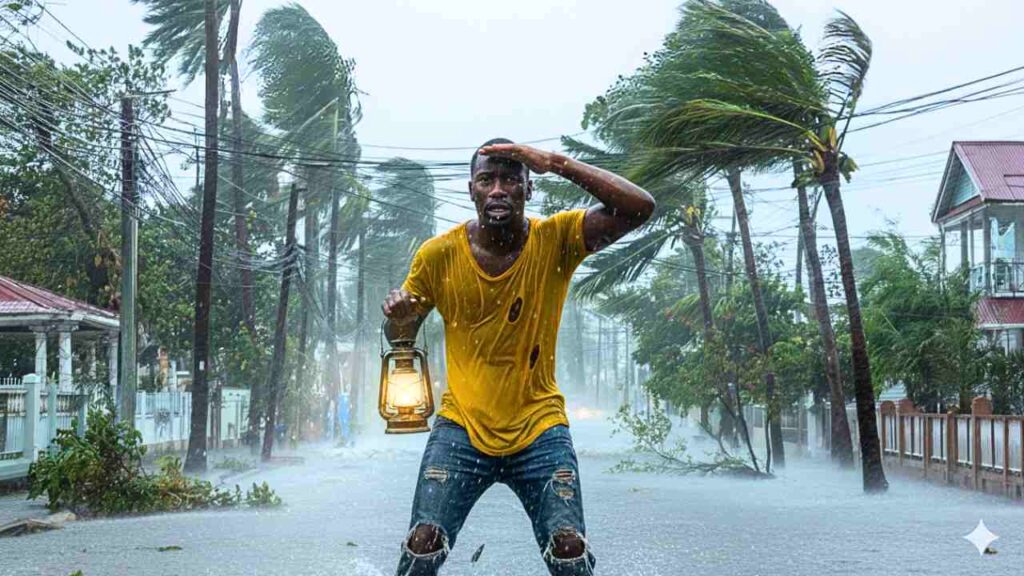
KINGSTON, Jamaica – The air across Jamaica is heavy—not just with moisture from the departing clouds, but with a profound, collective anxiety. We have lived through the fury of a catastrophic Category 5 Hurricane, a system of immense power that has tested the very foundations of the nation. As the winds drop to a low howl and the torrential rains become intermittent showers, the difficult work of counting the cost—both physical and psychological—begins.
Click to read the latest news on the aftermath of Hurricane Melissa and Jamaica.
Full Video Podcast discussion of this topic at the end of the article
St. Elizabeth and Eastern Westmoreland:
The Met Service projects Melissa will make its initial impact near the border of western St. Elizabeth and eastern Westmoreland. This stretch of coast, encompassing Treasure Beach, Border, Scotts Cove, Whitehouse, Belmont, and Bluefields, is set to face a massive storm surge.
For the tightly-knit community of Treasure Beach, St. Elizabeth, the storm surge is the great equalizer. The salt-laced wind already carries a low moan, a sound that signals nature’s upheaval. Homes and small guesthouses built close to the sea will not withstand the wall of water. The people here, accustomed to a slower, quieter life, are now frantically moving fishing boats and securing what little they have. Evacuation to established shelters inland—often school buildings—is complicated by the fear of leaving their property unprotected, a problem that plagued preparations during Hurricane Ivan. Many local businesses, like the renowned Jakes Hotel and Restaurant, which relies heavily on fresh, locally-sourced produce, face certain destruction of ground-level infrastructure and widespread damage to the farming and fishing supply chain. Readers can see a feature story on the popular locale at Jakes Hotel in Treasure Beach: A South Coast Institution
Further west, communities like Whitehouse, Belmont, and Bluefields in Eastern Westmoreland, the reality of a Category 5 strike means isolation. Roads, particularly coastal thoroughfares like the A2, will be compromised by both storm surge and inevitable landslides from nearby hills, potentially cutting off access for relief efforts. The disruption of the Jamaica Public Service (JPS) grid is virtually guaranteed, plunging thousands into darkness. As reported by The Jamaica Gleaner, the local authority has been proactive in preparing shelters, yet the sheer volume of rainfall means many are still at risk of being cut off from assistance. Loss of livestock in farming areas—chickens, goats, cattle—will compound the human tragedy, hitting the livelihoods of rural families immediately and severely.
Negril’s Seven Mile Beach:
In Negril, specifically the 7 Mile Beach strip, the main impact will be to the physical landscape that draws tourists from across the globe. The storm surge and relentless wave action will scour the delicate coastline. The powdery white sand that defines the experience here will be shifted, pulled out to sea, and piled in unnatural dunes, drastically altering the beach’s profile.
The human element is focused on the large resort staff and the owners of the smaller establishments along the beach. Evacuations have been underway, pushing thousands of guests and non-essential staff inland. The long, low structures characteristic of many beach resorts are vulnerable. Local residents who live just behind the resort strip face the threat of severe flooding as the ground level water table rises rapidly. Loss of electricity is a certainty, disabling pumps that are vital for both water supply and sewage management, turning the immediate post-storm environment into a public health concern.
Pier 1, Montego Bay:
Pier 1 in Montego Bay, a hub of commerce and entertainment, stands to be severely impacted. Though shielded somewhat by the natural curve of the bay, the extreme wind and rain predicted by forecasters at the Met Service will threaten the large, open-air structures. Mayor Richard Vernon, as reported by The Jamaica Observer, has stated that the city is “as ready as it can be,” but the threat level is unprecedented.
The impact here is centered on infrastructure. The major roads leading into and out of the city—a lifeline for western Jamaica—will be choked by flooding and debris. Homes in low-lying areas of the city, especially those near gullies and storm drains, will rapidly flood, forcing immediate, chaotic movement to central shelters. For the city’s residents, the lack of electricity means a standstill for all business, transport, and communication—a deep, frustrating quiet replacing the city’s usual rush.
Trelawny: Coastal Erosion and Inland Isolation
Trelawny, with its dual identity of coastal tourism and rugged inland terrain, faces a complex threat profile.
Along the coast, major hotels like Ocean Eden Bay and Royalton have executed mandatory evacuations, moving hundreds of guests and staff out of high-risk rooms and potentially out of the parish entirely. The primary concern is not just structural damage to the properties, but the crippling effect on the crucial tourism sector. A prolonged shutdown will be a harsh blow to the thousands of families whose livelihoods depend on these hotels.
Inland, the Cockpit Country and the town of Christiana will experience the effects of relentless, heavy rain. This rain will trigger landslides, choking the narrow, winding roads that serve as the only routes to market towns. Residents of these remote, agricultural communities will be cut off, with damaged roads making post-storm assessment and relief distribution nearly impossible. The erosion will strip topsoil, decimating yam, potato, and corn crops, leading to food shortages and a sharp increase in prices at markets weeks after the storm passes, a recurring, painful lesson learned from storms like Hurricane Gilbert in 1988. See more on that historical disaster at Hurricane Gilbert’s Lasting Impact on Jamaica
A Unified Call for Action
The approaching force of Hurricane Melissa compels a unified response. The lessons of resilience honed over decades, from the impact of Hurricane Ivan, must be put to immediate use. The time for observation is over; the time for action, for securing shelter, and for checking on neighbors is now. The coastal parishes are not just facing a storm; they are facing a moment of reckoning that will test the human spirit against the untamed power of the Atlantic.
Full episode on this topic
Do you want more Kareem’s Quest content?