
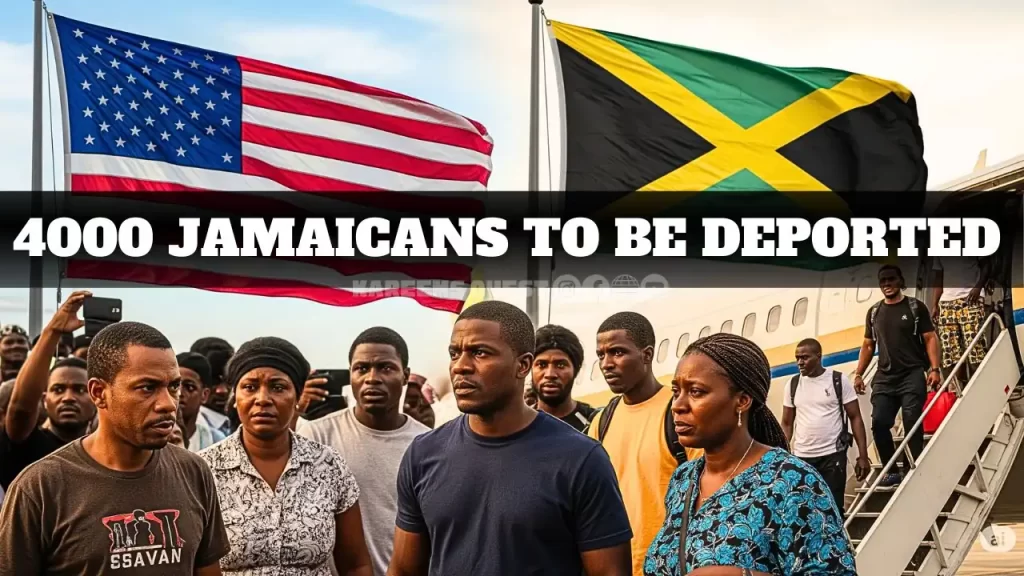
Jamaica Braces for 4000 US Deportees: The Impact

Kingston, Jamaica – The specter of mass deportation looms large over the Caribbean, with Jamaica at the forefront of nations anticipating a significant influx of its citizens from the United States. Recent communications from US authorities indicate that nearly 4,000 Jamaicans are slated for removal, a direct consequence of President Donald Trump’s comprehensive immigration enforcement policies. This anticipated return marks a critical juncture for the island nation, necessitating robust strategies for reintegration amidst growing concerns over national security and social welfare.

Full Video of Deportation at the end of the article. 

Minister of National Security, Dr. Horace Chang, has confirmed the figure of approximately 3,900 Jamaicans facing deportation. While a substantial portion of these individuals are being removed for unlawful entry and various immigration breaches, the cohort also includes repeat sex offenders and those convicted of other serious crimes. This development aligns with President Trump’s declared commitment to conducting the largest mass deportation in American history, targeting millions of undocumented migrants within US borders. Data from US Immigration and Customs Enforcement (ICE) reveals that in the initial 100 days of his administration, roughly 66,463 undocumented individuals were apprehended across the United States, with 65,682 subsequently removed.1 The criminal profiles of those arrested by ICE and Homeland Security agents underscore the diverse nature of offenses, including thousands of assaults, driving while intoxicated or under the influence, and weapon-related convictions.

How ICE Targets and apprehend Jamaicans 

Understanding the scale of anticipated deportations necessitates an examination of how US immigration enforcement, particularly ICE, operates. A significant proportion of apprehensions occur through interactions with the local criminal justice system. When individuals are arrested by local police for any offense, their fingerprints are routinely checked against federal databases. If an immigration violation or prior removal order is flagged, ICE can issue a detainer request, asking local authorities to hold the individual for federal custody.2 NPR reports that the majority of interior removals—79 percent of ICE deportations from the US interior between Fiscal Years 2021 and 2024—involved individuals with a criminal conviction, often stemming from such collaborations.3

Beyond local law enforcement transfers, ICE also conducts targeted operations, including surveillance of homes and workplaces. While judicial warrants are generally required for entry into private residences, NPR has documented instances where businesses brace for immigration-related workplace raids, signaling an intensified focus on worksite enforcement.4 Information sharing between various agencies, including state Departments of Motor Vehicles and commercial databases, further assists ICE in locating individuals.5 Moreover, ICE’s Office of International Affairs (OIA) and Homeland Security Investigations (HSI) maintain close ties with foreign law enforcement bodies, including those in Jamaica, to exchange information on criminal and immigration histories.6

When detained, what can the Jamaican Government Do?

The Jamaican Government is legally bound to accept its citizens who have been ordered deported. The Ministry of Foreign Affairs and Foreign Trade (MFAFT) outlines its role in facilitating the process, which includes providing information on detention arrangements, offering contacts for legal counsel, and arranging consular visits for detained Jamaicans abroad [MFAFT Jamaica].7 However, the Ministry explicitly states its inability to refuse entry to verified Jamaican citizens, intervene in foreign legal processes, or overturn deportation orders.

Is Jamaica Prepared for these Deportees

Prime Minister Dr. Andrew Holness has sought to reassure the public that the government is prepared to receive law-abiding returning Jamaicans, emphasizing that hardworking individuals are always welcome home [Office of the Prime Minister, Jamaica]. Simultaneously, the Prime Minister has issued a stern warning to those with criminal intent, asserting that enhanced security measures and vigilant monitoring will be in place to prevent any destabilisation of communities.8 The anticipated influx of deportees, particularly those with serious criminal backgrounds, has prompted the Holness administration to revisit legislative recommendations, including adding deportees convicted of sex crimes overseas to Jamaica’s sex offender registry. This proactive stance reflects the government’s recognition of the potential strain on social services and law enforcement resources that a large-scale return could impose.


Not Just Jamaica, but other islands

The deportation of citizens from the United States is not a unique challenge for Jamaica; it is a pervasive issue across the Caribbean. The US consistently deports a substantial number of individuals to the region.9 NPR has highlighted the significant increase in deportations from the US to various countries, with a notable surge in removals to nations like Haiti. While the exact figures fluctuate, Jamaica consistently ranks among the top English-speaking Caribbean nations for deportations. A Migration Policy Institute report, often cited by news outlets including NPR, notes that over 45,000 Jamaicans were deported from abroad between 2000 and 2014, primarily from the United States, the United Kingdom, and Canada,10 with an average of over 100 Jamaicans returning monthly.11 Crucially, 89 percent of Jamaican deportees in 2012 were repatriated for criminal offenses, underscoring the complex challenges faced by the receiving nation [Migration Policy Institute – Rebuilding Self and Country].12 This shared experience among Caribbean nations necessitates regional dialogue and potential collaborative strategies to manage the socioeconomic and security implications of these forced returns.

Challenges faced by Deportees

For many deportees, the return to Jamaica is fraught with profound challenges. Socioeconomic hurdles, including a severe lack of employment opportunities, financial instability, and housing difficulties, are commonplace. Beyond the material, deportees often grapple with significant social stigma, experiencing discrimination and rejection that can make escaping the “deportee” label exceptionally difficult. Many face the arduous task of rebuilding their lives after years, sometimes decades, spent abroad, contending with culture shock and a profound sense of loss of identity.

The rupture of family bonds is another devastating consequence. NPR has frequently reported on the severe impact of deportation on mixed-status families in the US, detailing the emotional hardship and trauma inflicted on children separated from their parents.13 For those returning to Jamaica, reconnection with family can be a lifeline, with relatives often providing crucial financial and emotional support. However, this also places a significant burden on families, who may not be adequately equipped to support returning members who arrive with little to no resources. While government agencies and non-governmental organisations (NGOs) are working to assist with reintegration, the sheer volume and diverse needs of deportees present a formidable challenge.

What’s Next?

The ongoing trend of deportations from the United States will continue to shape the social, economic, and security landscape of Jamaica and the broader Caribbean. While nations have a sovereign right to manage their borders, the human consequences of deportation are profound, affecting individuals, families, and communities.14 As Jamaica prepares for this latest wave of returns, the focus remains on striking a delicate balance between national security imperatives and providing meaningful pathways for the reintegration of its citizens, ensuring that the silent return does not lead to a forgotten population.

Sources:

Leave a Comment

Your email address will not be published. Required fields are marked *

Scroll to Top