
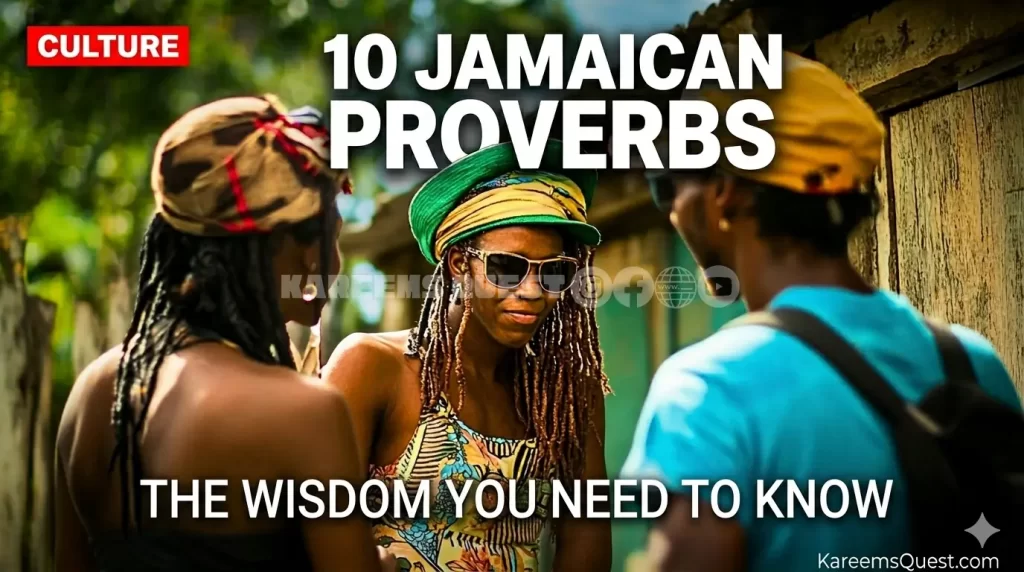
Language is the mirror of a nation’s soul, and nowhere is that more evident than in Jamaica. While English is the official language, Patois (or Patwah) is the rhythmic, expressive heartbeat of daily communication. Born out of a blend of African linguistic roots, English, and various European influences, Patois is a dialect and an artform.
The truest depth of Jamaican Patois is found in our traditional proverbs (proverbs). Passed down through generations by grandmothers (farnes) and community elders, these short sayings pack a massive punch of philosophy, dry humor, and sharp psychological insight. Here are 10 essential Jamaican proverbs that offer a masterclass in island survival and mindset.
Language, behaviors, and standard daily taboos are deeply linked to our cultural philosophy. To understand why older generations say the things they do—and discover the underlying logic that drives island life—explore this detailed video breakdown:
Look Deeper Into Jamaican Beliefs and Old-School Mindsets
10 Essential Proverbs and Their Meanings
- “Chicken merry, hawk de near.”
- Meaning: Danger often lurks when you are at your most careless or celebratory. Enjoy your success, but always stay vigilant.
- “Every mickle mek a muckle.”
- Meaning: Do not despise small beginnings or small savings. Consistent, small efforts lead to massive results over time.
- “Wha gone bad a marnin, can’t come gud a evening.”
- Meaning: First impressions and a solid foundation matter. If a situation or partnership starts with bad intentions, it rarely ends well.
- “One eye man a king a blind man country.”
- Meaning: Appreciate your unique advantages, no matter how small they seem. Even limited knowledge or resources can make you a leader in the right environment.
- “Trouble no set like rain.”
- Meaning: Misfortune and challenges arrive unannounced without signs, so you must always live prepared.
- “Nuh buy puss inna bag.”
- Meaning: Never enter into an agreement, purchase, or contract blindly without inspecting the details yourself.
- “Cow nuh know di use a him tail till him lose it.”
- Meaning: We often fail to appreciate the true value of people, health, or opportunities until we no longer have them.
- “Quattie bred, tuppence butter.”
- Meaning: An expression used to describe things that are perfectly matched, proportional, or a classic, inseparable combination.
- “Si mi and come live wid mi a two different ting.”
- Meaning: It’s easy to get along with someone superficially, but you don’t truly know a person’s character until you experience their daily realities up close.
- “Rain a fall, but dutty tough.”
- Meaning: Even when things look prosperous or helpful on the outside, the economic reality on the ground remains difficult for everyday people.

The Philosophy of Ital Living and Language
These proverbs shape how Jamaicans navigate commerce, relationships, and nature. From the Rastafarian concept of Ital living—staying close to the earth and consuming natural, pure foods—to the witty bartering vocabulary used by vendors in our vibrant town squares, the language is deeply tied to the physical landscape.
To truly understand these proverbs, you have to experience the communities where they are spoken daily. Whether you’re navigating the mountain villages or historical coastal towns, having a structured guide makes all the difference. The Ultimate Travel Guide Booklet, Explore Jamaica breaks down the island by parish, making it incredibly easy to immerse yourself in local culture, meet the people, and hear these phrases in their natural habitat.
Keep Exploring the Culture:
- See how folk wisdom applies to everyday island life on the road in our article: A Rasta’s Bounty: Jamaican Fruit & Folk Wisdom on the Road.
- Discover the fast-paced world of local commerce and community language with From a Pin to an Anchor: Street Vendor Christine’s Closet.
Watch the latest Kareem’s Quest Podcast videos on YouTube, click the link below