
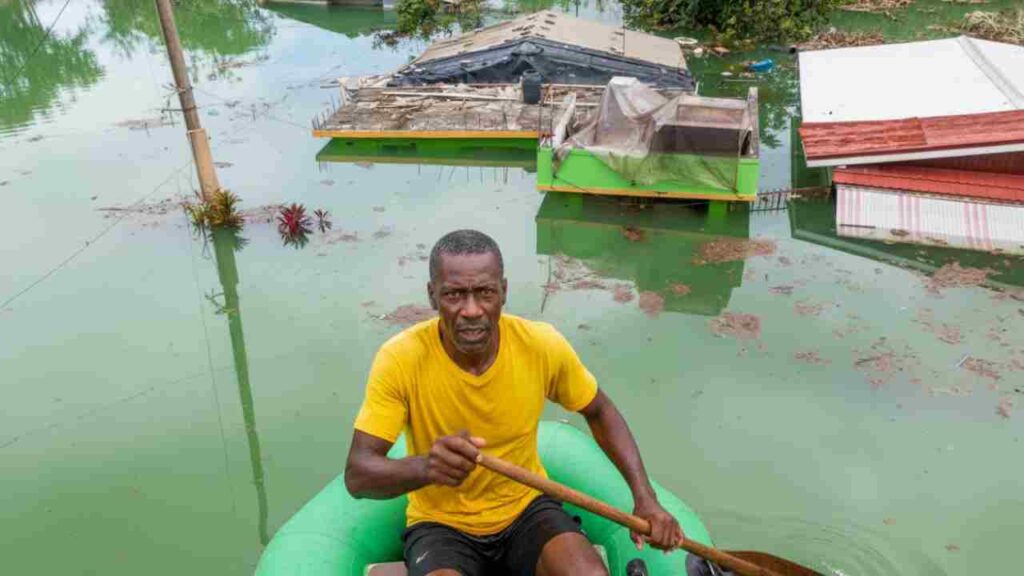
While the immediate devastation along Jamaica’s coastline, including areas like Treasure Beach, rightfully captured global headlines, a parallel crisis is unfolding in many of the country’s inland towns. Category 5 Hurricane Melissa delivered extraordinary rainfall, leading to severe and prolonged flooding that has forced hundreds of residents from their homes and marooned entire communities, challenging the national disaster response in central and southern parishes.
Rising Groundwater Traps Content, Manchester
The parish of Manchester is grappling with an unusual and difficult form of flooding, primarily driven by a significant rise in groundwater levels. In sections of Content, Williamsfield, water levels continue to climb days after the hurricane’s passing.
Deputy Managing Director at the Water Resources Authority (WRA), Geoffrey Marshall, reported that gauge readings indicate the highest water level recorded since monitoring began.
“We are observing the gauges that we installed, the water level has risen…Right now it’s the highest we have seen since we started monitoring. The gauge we installed on Monday, the readings we have gotten from it…indicates a measure of about 13.13 feet, which reflects a total rise of seven to eight feet since installation,” Mr. Marshall explained to JIS News.
This rise, according to the WRA, occurred after prolonged, heavy rainfall saturated the soil, forcing water from the aquifer system to surface. An aquifer is simply a naturally-created underground layer of permeable rock or sediment that holds and transmits water. The heavy rain overloaded this subterranean reservoir, causing the water to push up through sinkholes and flood the area. Residents have noted that this is the highest the water has risen since 2002.
For individuals like resident Horace McFarlane, who has lived in Content for decades, the water began flooding homes shortly after the hurricane’s passage. He recounted hearing “some rumbling under the earth” before the water began soaking the soil and submerging houses.
The WRA advises that this phenomenon is naturally occurring and cannot be pumped out. The water levels will only decline as the aquifer drains over time, a process Mr. Marshall warned could take “a couple weeks maybe months before it moves down,” meaning the affected roadway will remain impassable for the foreseeable future, as reported by the Jamaica Information Service.
Surface Water Inundates Brighton, St. Elizabeth
A different, yet equally severe, situation is occurring in the southern parish of St. Elizabeth. While some coastal areas bore the brunt of the wind, the heavy rainfall has overwhelmed inland drainage systems.
The WRA’s Managing Director, Peter Clarke, clarified that the flooding in Brighton District is primarily caused by increased surface water settling in the community, not rising groundwater.

“A lot of that area of Carmel and Brighton [in Santa Cruz] is surrounded by water on one side by the New River, the Black River, Smith River, and the Braes River. What has happened is that because of the intense rain and the volume of flow that the rivers were experiencing, the New River broke its bank and essentially flooded out the Brighton area and lower parts of Santa Cruz,” Mr. Clarke told JIS News.
The situation is worsened by the sheer volume of run-off from the surrounding hills, compounded by the inability of the water to drain quickly, as parts of Santa Cruz are below sea level.
Mr. Clarke emphasised caution, particularly regarding water contamination, telling JIS News that residents must:
“stay safe and staying safe means staying away from deep waters because that is a hazard. Remember, that water now is mixing with the terrain, and you don’t know what has been within the neighbourhood… there is interaction between the water, and these let us call them facilities that may cause the water to be even more contaminated than you expect.”
The WRA continues to monitor several other areas where flooding is active or likely, including Chigwell in Hanover and Newmarket in St. Elizabeth, demonstrating the national scope of this inland water crisis
The extensive damage has also impacted western parishes like Westmoreland, but the inland flooding in central Jamaica presents a unique, long-term challenge to the island’s ability to move people and goods. These communities now face weeks or months of waiting for the water to naturally recede, underscoring the severity of the Category 5 Hurricane’s hydrological impact.
To find out how you can help visit: https://supportjamaica.gov.jm/
Given that the Content flooding is a natural, slow-draining phenomenon, what long-term infrastructure changes can these inland communities realistically implement to mitigate the continuous threat of rising water?
Share your thoughts in the comment section below.