


She placed before me a plate that was a study in earthy greens and ochre, with a rich, creamy cacoon coconut rundown that was pure comfort. Beside it, a chickpea curry, speckled with what I initially swore were tender potato cubes, turned out to be exquisitely diced green papaya – a delightful surprise! But it was the accompaniments that truly stole the show: perfectly fried breadfruit and crisped, pressed green plantains. It got me thinking, as I savored each bite, about the unsung heroes of our Jamaican plates, the supporting cast that so often elevates a meal from good to truly unforgettable. Americans might reach for mac and cheese or french fries, but here on our island, our side game is strong, often so compelling they could stand alone as appetizers.
Roast or Fried Breadfruit
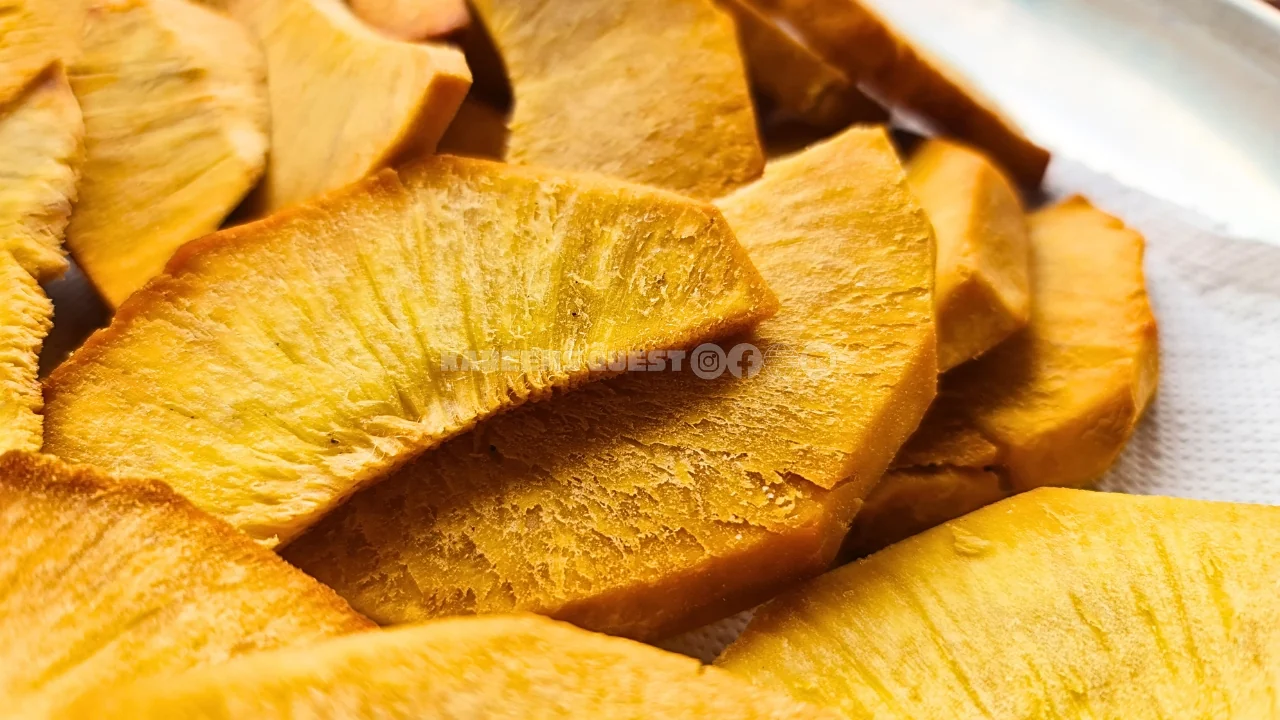
Core Identity: Breadfruit, a staple across the Caribbean, takes on two glorious forms as a side. Roasted, it boasts a slightly crisp exterior and a soft, dense, doughy interior with a distinctly earthy, starchy flavour. Fried breadfruit, on the other hand, is a golden-brown marvel, with a delightfully crispy crust and a tender, doughy inside, offering a richer, satisfying taste due to the frying process.
Key Ingredients: Mature breadfruit. For frying, cooking oil is essential, and sometimes a pinch of salt.
Preparation: To roast, a whole breadfruit is typically placed directly in an open fire or baked in an oven until the skin is charred and the inside is tender. Make sure to put a ‘x’ at the opposite end to the stem before the previous step. It’s then peeled and cut. For frying, the breadfruit is peeled, cored, and cut into wedges or slices, then deep-fried until golden and crispy.
Cultural Significance: Both roasted and fried breadfruit are quintessential for breakfast accompaniments. Roasted breadfruit often pairs beautifully with ackee and saltfish, callaloo, or rundown. Fried breadfruit is incredibly versatile, complementing fried fish, escoveitch fish, or any stew.

Fried Green Plantains (Tostones/Patacones)
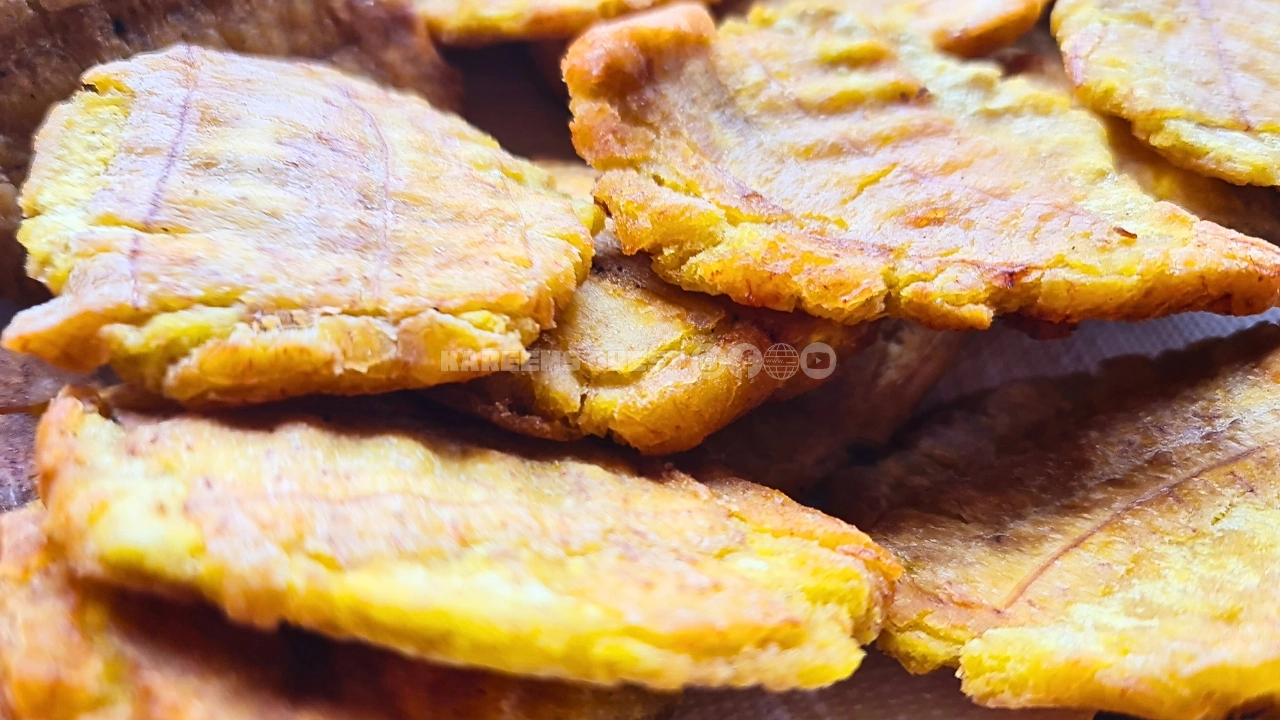
Core Identity: Fried green plantains are thick, golden-brown disks, often with irregular, craggy edges from being pressed. Their appearance is firm and inviting, a stark contrast to their sweet ripe counterparts. The taste is distinctly starchy and savoury, subtly earthy, and not sweet at all. The texture is delightfully crispy on the outside, yielding to a dense, starchy, and slightly firm interior. Each bite offers a satisfying crunch.
Key Ingredients: Firm, green (unripe) plantains, cooking oil, and salt (to taste, after frying).
Preparation: Green plantains are peeled and sliced into thick rounds. These rounds are then fried in hot oil until slightly softened but not fully cooked. They are then removed, pressed flat, and returned to the hot oil for a second fry until they achieve their characteristic golden crispness. They are typically seasoned with salt immediately after the second fry.
Cultural Significance: Fried green plantains are a fantastic and popular savoury side dish across the Caribbean and Latin America, and certainly enjoyed in Jamaica. They make an excellent accompaniment to savoury meals like fried fish, curried chicken or goat, stews, or even as a sturdy base for toppings. While they can be a snack, their robust nature makes them a satisfying component of lunch or dinner plates.
Fried Ripe Plantains
Core Identity: These are slices of ripe plantain, fried until golden brown and caramelized. Their appearance is a deep golden to almost reddish-brown, often with slightly crispy edges. The taste is wonderfully sweet, almost like a dessert, with a soft, creamy interior.
Key Ingredients: Ripe plantains (the riper, the sweeter, indicated by black spots on the skin) and cooking oil.
Preparation: Ripe plantains are peeled, sliced (either diagonally or into rounds), and then fried in hot oil until they achieve that beautiful golden hue and sweet caramelization.
Cultural Significance: Fried ripe plantains are a universal crowd-pleaser and can accompany almost any savoury dish, from curries and stews to fried chicken and rice and peas. They bridge the gap between a side dish and a sweet treat, often appearing at both lunch and dinner.
Fry Dumpling / Johnny Cake
Core Identity: Fry dumpling, also known as Johnny Cake in some parts, is a golden-brown, irregularly shaped fried dough. It boasts a beautifully crisp exterior that gives way to a soft, fluffy, almost airy interior. The taste is mildly savoury, perfect for accompanying a range of dishes.
Key Ingredients: Flour, baking powder, salt, sometimes a touch of sugar, and water.
Preparation: A simple dough is formed, kneaded briefly, then shaped into small, often flattened rounds or irregular pieces, and deep-fried until golden and puffed.
Cultural Significance: Fry dumplings are a breakfast staple, an absolute must with ackee and saltfish, callaloo, or mackerel rundown. They also make an appearance at lunch, particularly with curried goat or chicken. Their versatility and satisfying texture make them a constant favourite on the Jamaican table.
Roast Yam
Core Identity: Roast yam presents as a dense and subtly earthy root vegetable, often with a slightly fibrous texture, depending on the variety. Its appearance is generally off-white to pale yellow, and it has a comforting, grounding taste.
Key Ingredients: Fresh yam (yellow yam or white yam are common choices).
Preparation: Yam is roasted in an oven or, traditionally, over an open fire until tender throughout. The exterior is then scraped off with a knife.
Cultural Significance: Roast yam is a substantial and highly regarded side dish, particularly in rural areas. In Trelawny, the “Cockpit Country,” it’s almost sacrilege not to have it with saltfish – a truly iconic pairing. It’s a hearty lunch or dinner component, especially after a day of work, providing sustained energy and deep satisfaction.
Create your own adventure

Craving your own Jamaican escape? Head over to our TOUR PAGE to connect with Kareem’s Quest! We can help you plan your itinerary, find the perfect hotels and adventures, and ensure you experience the authentic side of Jamaica. Get ready to fall in love with Jamaica, mon!